
Education Programs
Gender-transformative Agroecology for Climate Resilience
 Co-delivered between Coady Institute and Seed Savers Network Kenya
Agroecology is both a science and a practice rooted in the understanding that agriculture is deeply embedded in ecological, social, and cultural systems. At the same time, agroecology is a movement that centers farmers’ knowledge, food sovereignty, and social justice. By integrating environmental stewardship with equity and community-led action, agroecology challenges industrial agricultural models that rely heavily on external inputs, often degrade ecosystems, and are responsible for a significant share of global greenhouse gas emissions, exacerbating the climate crisis. It offers pathways for community climate resilience, building adaptive capacity and contributing to climate change mitigation. Crucially, gender-transformative agroecology (GTAE) recognizes that resilience cannot be achieved without addressing structural inequalities. GTAE goes beyond simply including women in existing systems; it seeks to challenge and reshape power relations, norms, and institutions that perpetuate inequity. It recognizes that sustainable climate solutions require not only ecological transformation but also social transformation.
In this course, participants will engage with conceptions of community climate resilience to draw connections between gender-transformative approaches to agroecology and building climate resilience. Located at Seed Savers Network (SSN) in Gilgil, Kenya, the course will ground concepts and participatory approaches in the work SSN does in centering the expertise of farmers for community-led action in fighting for a more just food system and more resilient, equitable communities. Before arriving at SSN for the in-person course, participants will complete a brief online module introducing key climate change concepts including its causes and impacts, adaptation, mitigation, and resilience. The online module will prepare learners for the deeper in-person exploration of climate resilience and agroecology.
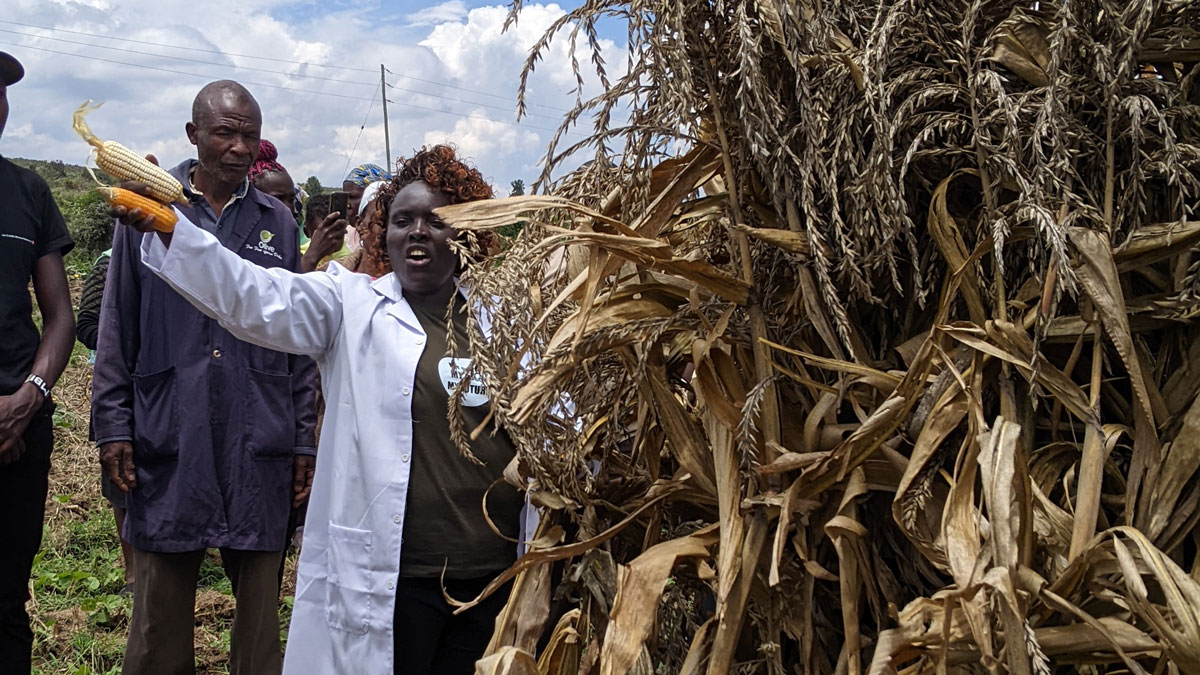
During the 6-day in-person course, we will explore climate resilience and gender-transformative agroecological transitions through strengths-based, participatory, and feminist approaches, grounded in practical, hands-on experiences at the SSN training center and nearby farms. Lead farmers and “Seed Ambassadors” within SSN’s network will also share their insights and co-facilitate sessions, bringing to the course their first-hand experience of navigating and negotiating within unjust food systems. The course aims to equip learners with foundational knowledge and practical, participatory tools and methods to support community-led action for climate resilience through gender-transformative agroecology.



March 8 to 13, 2027
Applications close November 1, 2026, or earlier if we reach the enrollment cap of 26 participants.
FACILITATORS:
Marian Turniawan, Coady Institute
Wambui Wakahiu, Seed Savers Network
Tabitha Munyiri, Seed Savers Network
COURSE TYPE
In-person
LOCATION:
Gilgil, Kenya (SSN Training Center)
Who can apply
This course is designed for anyone interested in exploring the intersections of climate resilience and equitable food systems at the community level. It creates space for participants to share their experiences and contexts, enriching collective learning. We welcome participants from a wide range of backgrounds, including farmers; staff from NGOs, non-profits, and civil society organizations; professionals working in government, policy, journalism, and law; and academics seeking to engage with grassroots change makers.
There are no geographic restrictions for participation; however, participants are responsible for arranging their own travel to Kenya. As the course is delivered in English, proficiency in English is required. Participants should also have access to the internet and a desktop or laptop computer, tablet, or smartphone to complete the online module.
Personal benefits
By the end of this course, participants will be able to:
- Describe key concepts related to climate change, community climate resilience, and agroecology, including how agroecology functions as a science, practice, and movement that contributes to climate adaptation and mitigation.
- Analyze how gender-transformative approaches to agroecology address structural inequalities and strengthen community climate resilience by transforming power relations, norms, and decision-making processes.
- Apply participatory and community-led approaches (tools, methods, and processes) – including strengths-based and feminist approaches – to support agroecological transitions and climate resilience initiatives.
- Explain the role of community-led advocacy in shaping enabling environments for gender-transformative agroecology and seed sovereignty, including strategies used to influence policies and legislation.
Time requirement
The course is delivered over six days in Gilgil, Kenya, at the Seed Savers Network Training Center. Participants must attend all six days to complete the course. Prior to the in-person component, participants must complete a short, self-paced online module to review the climate change basics. No live sessions are included in the online portion.
Fees
Tuition for this course is $1,500CAD. Coady Institute is committed to ensuring that practitioners and community members dedicated to community-led development worldwide have access to its courses. Thanks to the generous support of individual, institutional, and corporate donors, accepted participants will receive full tuition bursaries for the course. Accommodations and three meals daily are also covered.
All transportation related expenses including airfare and visa fees, as well as travel cancellation and emergency medical insurance, are the responsibility of the participant who are also responsible for any personal expenses and incidental costs.
Please Note
An asynchronous online module is to be completed through StFX Online. The module will open February 8, 2027, prior to the start of the in-person course, and participants must complete it before the first day of the in-person course.