As an institution focused on the local as well as the global, we are also mindful of the vast range of Indigenous voices, languages, cultures, histories, and lived experiences. Indigenous peoples are not a homogenous group.
As we reflect on this National Day for Truth and Reconciliation, Coady Institute acknowledges and expresses our deep gratitude and appreciation to the generations of Mi’kmaq who, since time immemorial, have loved and stewarded these lands. In our work, we recognize that colonization is not just something that exists in the distant past, but is something that exists in the very frameworks we work and live in. We acknowledge – and understand – that it is our responsibility therefore continually work to decolonize ourselves and the Institute.
We have come some way forward, but we know there is still much for us to learn. The 94 Calls to Action in the Truth and Reconciliation’s Report guide us in this journey. Call number 62 in particular focuses on education, highlighting our responsibility not just to secure funding to educate teachers on how to integrate Indigenous knowledge and teaching methods into classrooms, but to ensure that this integration happens in authentic ways. At Coady, this means ensuring we have programs that are developed and run by Indigenous Elders, mentors and educators for Indigenous communities, as well as showcasing Indigenous knowledge for everyone, in ways that ensure we are doing so with intention and permission, not by appropriation. As an institution focused on the local as well as the global, we are also mindful of the vast range of Indigenous voices, languages, cultures, histories, and lived experiences. Indigenous peoples are not a homogenous group.
Given our focus on community wellbeing, from social and economic standpoints, as well as the environmental health of our planet, Coady Institute has the potential to contribute to many other aspects of the calls, in terms of sharing strong examples of meaningful action in our programs and calling upon duty bearers to uphold their commitments. Moreover, Coady Institute is guided by the United Nations Declaration on the Rights of Indigenous Peoples, a critical call to ensure justice, equality, respect, and recognition for Indigenous peoples around the world.
Moving forward this year and beyond, Coady’s staff will continue to strengthen its core values and ways of working focused on respect, relevance, reciprocity, responsibility, and relationships, aptly reflected in the abundance of Indigenous scholarship and teachings. These will guide the way we interact with each other and the work that we do. We are also mindful that, as an Institution based in Canada, we hold an inherent tension between grassroots and hierarchical work and spaces. Coady Institute pledges, on this day and always, to continue to challenge our legacy by recommitting to intersectional and decolonial frameworks both locally and globally.
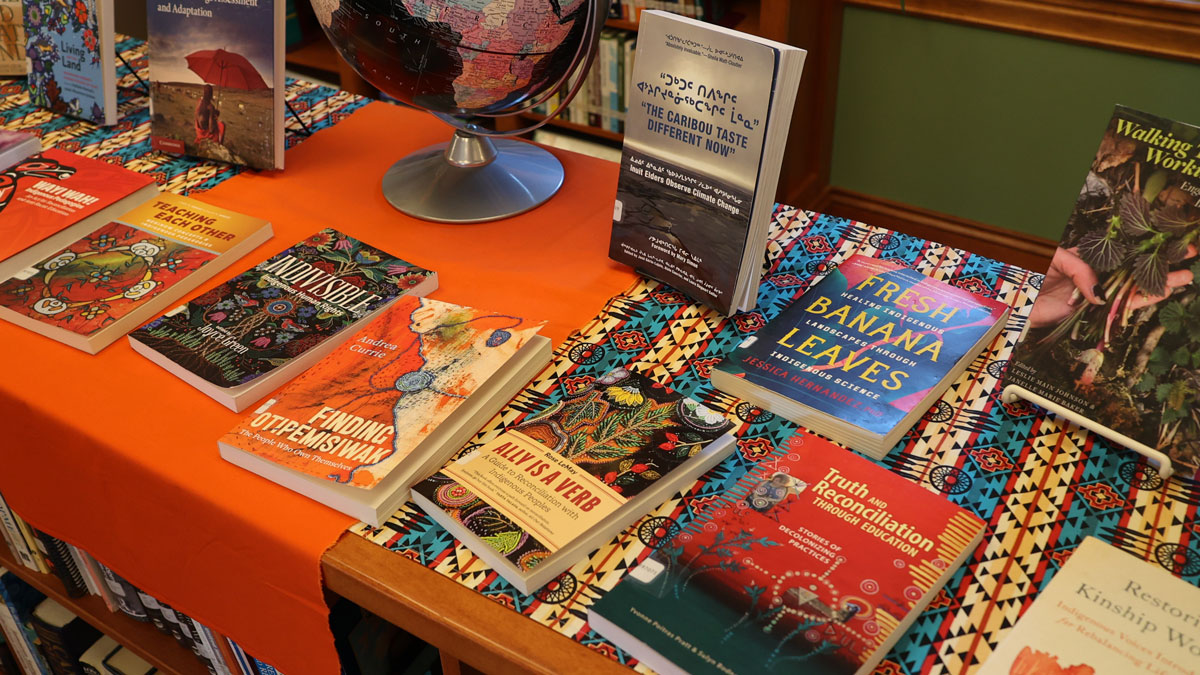
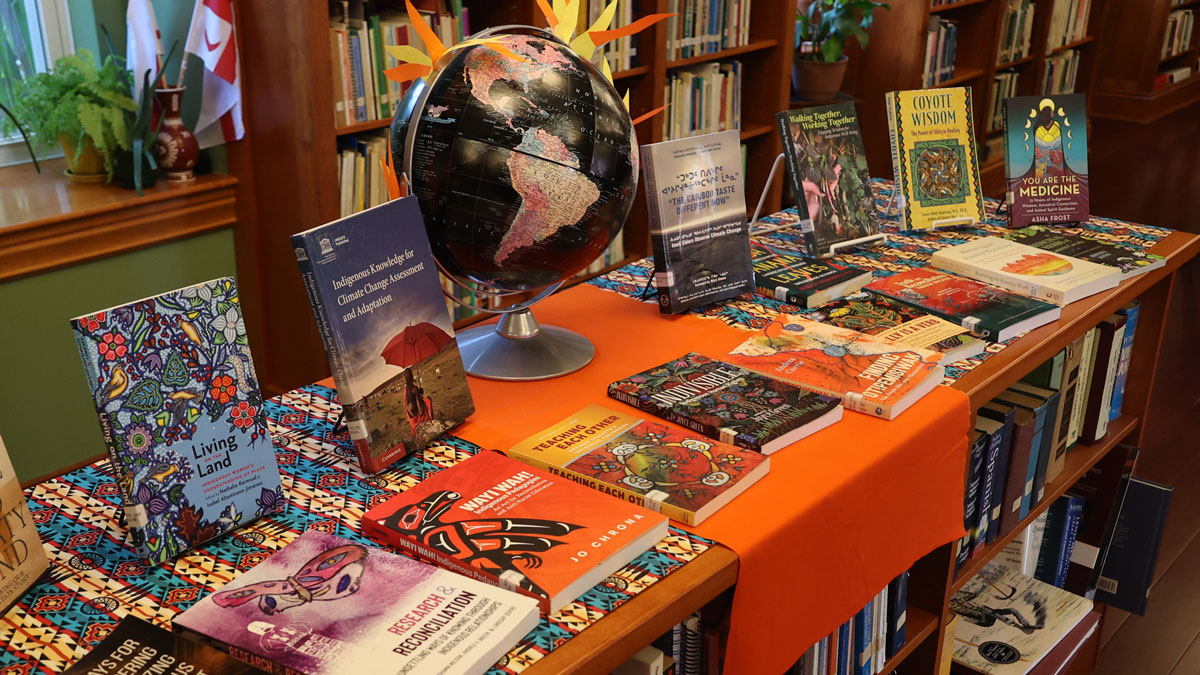
As part of our National Day for Truth and Reconciliation efforts, the Marie Michael Library located at Coady Institute offers a variety of resources on Indigenous knowledge for reading and reflection. The library is open from 9 am to 4 pm each day.
Other resources to consider include:
Truth and Reconciliation Commission – 94 Calls to Action
https://nctr.ca/records/reports/#trc-reports
Gord Downie & Chanie Wenjack Fund – Recommended Reading
https://downiewenjack.ca/recommended-reading-trw-2025/
National Film Board – Educational Films & Mini-Lessons
https://blog.nfb.ca/blog/2025/09/12/truth-and-reconciliation-resources-for-the-classroom/
CBC’s Beyond 94 – Tracking Progress on the Calls to Action
https://www.cbc.ca/beyond94
Orange Shirt Society – The Story Behind Orange Shirt Day
https://orangeshirtday.org