Emily Sikazwe has dedicated her life to advancing gender equality and the empowerment of rural communities in Zambia. As Executive Director of Women for Change (WfC) for 21 years, Emily championed initiatives that tackled poverty, dismantled gender discrimination, and built sustainable livelihoods for women and men alike.
At the heart of WfC’s mission is a vision of a gender-sensitive society: socially, politically, and economically empowered. WfC works with traditional leaders to confront barriers that limited participation in society. From advocating for women’s access to land and resources, to addressing the gendered impact of HIV/AIDS, Emily believes change required both grassroots mobilization and systemic transformation.
The approach goes beyond advocacy. WfC implements practical training programs like village banking, fish farming, cattle rearing, crop raising, and cooperative marketing strategies that equipped communities with tools for resilience and self-reliance.
“We want people not only to speak of empowerment, but to live it in their daily lives,” she says.
“We need to inform and educate the communities around their relationships and how things could be better if men and women worked together, and we create opportunities for boys and girls in families work together at home and in community as well.”
Emily’s work resonates deeply with the values of Coady Institute. Coady is internationally recognized for its approach to community-driven development, a philosophy that begins with the strengths and capacities already present in communities, rather than their deficits. For more than 60 years, Coady has worked alongside global leaders and grassroots organizations to promote citizen-led innovation, social justice, and systems change.
This shared vision of local empowerment and global solidarity brought Emily and Coady together. In recognition of her leadership, she received the Katherine Fleming International Development Award (KFA) in 2004. For Emily, the award was not just a personal honor but a validation of the collective struggle for equity in Africa. It demonstrated the importance of highlighting African women’s leadership on an international stage, showing how local movements can shape global conversations about justice and equality.
Her connection to Coady deepened further in 2005, when she became an associate, facilitating courses on gender analysis for policy and planning, advocacy, citizen engagement, and women’s leadership. In classrooms at Coady, Emily brought the same energy she carried into the field: a belief that education and empowerment are inseparable, and that when women lead, entire communities thrive.
Emily earned her Master’s in Adult Education at St. Francis Xavier University and in 2010, she was awarded an honorary doctorate from StFX. Despite officially retiring from WfC in 2014, Emily remains active in the organization’s mission in other ways. She launched the Nyapachuma Memorial Foundation (NMF) to work with women and girls to combat gender-based violence (GBV) and sextortion, particularly in higher learning institutions. The organization works with administrators and students in seven universities in Lusaka, Zambia.
NMF partners with Victoria International Development Education Association (VIDEA), a Canadian organization that promotes greater intercultural understanding and awareness of global issues. Together, they bring together post-secondary students and elders from Lusaka, Zambia and Indigenous youth and elders from Canada, to raise awareness and work towards long lasting change around GBV and sextortion through podcasts in a project called Raised Voices-Speaking up about GBV and Sextortion. Emily offered the closing speech at a Raised Voice Conference in September 2025 where she encouraged the more than 400 students present to speak out and report sextortion.
“Too many young people stay silent about sextortion because they fear victimization, failing their courses, or having their grades tampered with by those in power, but silence only protects the perpetrators,” she says.
“When you speak out and choose justice, you become a hero or heroine because your courage protects others. You will be protected. Do not be afraid.”
Emily has also served on the Electoral Commission of Zambia. First, as a Commissioner to run elections from 2015 to 2020 and then as Vice Chairperson of the Commission from 2020 until 2022.
Emily’s story is not just about one leader or one organization; it is about the kind of leadership the Katherine Fleming Award was designed to celebrate. By amplifying voices like Emily’s, Coady and its partners reinforce the message that sustainable development comes from within communities, and that global solidarity is strongest when rooted in local realities.
“I speak out in colleges, in community, in meetings abroad, in Africa, and at home,” Emily says about honoring Katherine Fleming’s legacy. “Katherine came and worked in community in Africa and if a women from a foreign country can come and work on my continent and die for it, it challenges me as an African, to do more.”
Through WfC, through her teaching at Coady, and through her lifelong advocacy, Emily Sikazwe embodied the values of resilience, service, and justice. Her journey shows why the Katherine Fleming Award remains so vital in Africa: it honors leaders who not only imagine a different future, but make it real.
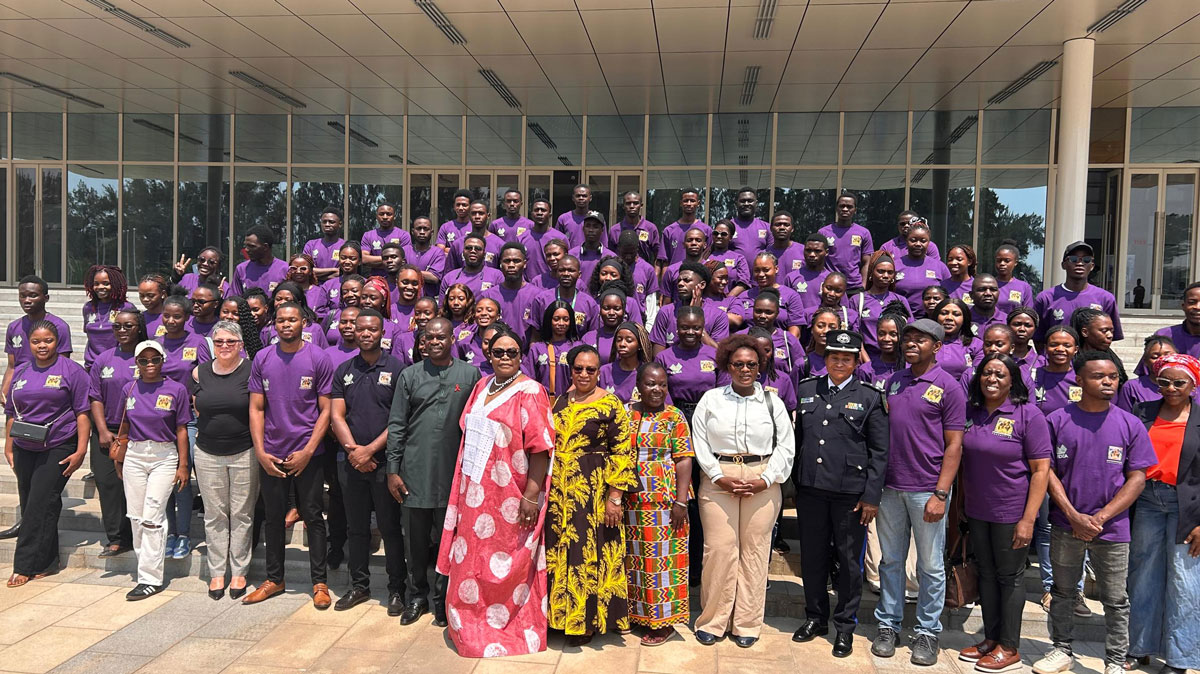
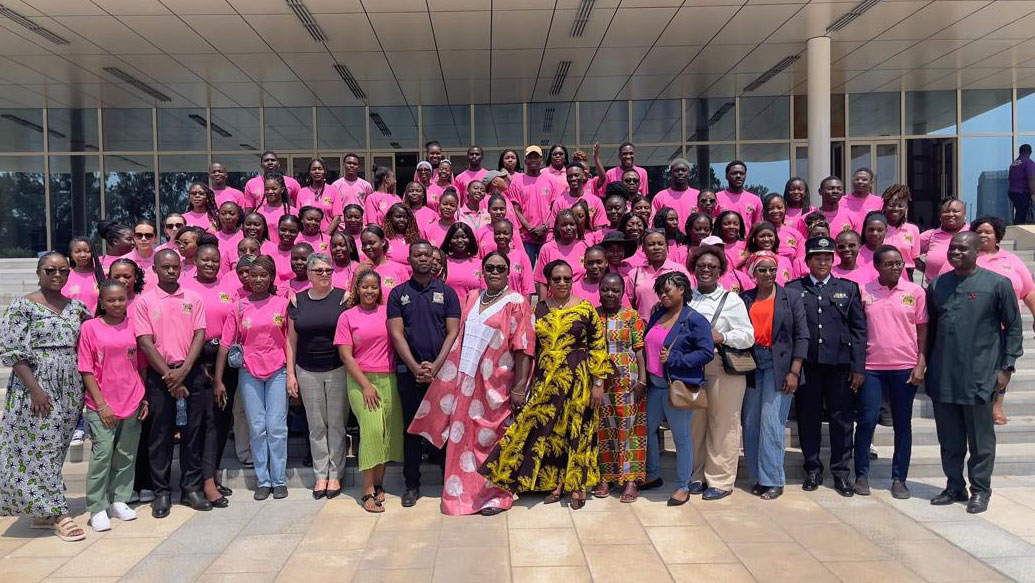
In September 2025, Emily spoke at the Raised Voice Conference in Zambia where she encouraged the more than 400 students present to speak out and report sextortion.
The Katherine Fleming International Development Award is presented annually to an African woman leader in memory of Katherine Fleming a 1985 graduate of St. Francis Xavier University (1985), who dedicated her life’s work to overcoming child poverty in Africa until her death in 1999.
Since 2000, Coady Institute has presented the prestigious award to 25 different recipients during StFX Homecoming celebrations. In 2025, to mark the 25th anniversary of the award, Coady Institute offered the first Katherine Fleming Women’s Leadership Course in partnership with Organization for Women in Self Employment (WISE) Ethiopia in Addis Ababa, Ethiopia. The award and course were made possible through the generosity of donors.
Learn more and donate by going to Katherine Fleming International Development Award.