
Education Programs
Building Community Resilience in a Changing Climate
Human-induced climate change is one of the most pressing global issues of our time. How humans have historically lived, played, and dreamed is changing. The impacts of climate change are felt across all sectors of human society: water and food systems, housing, health and sanitation, employment, industry, finance, security, and migration, to name several. Additionally, actions being taken around climate intersect with the interests of many civil society actors, such as those seeking gender justice, upholding and honouring indigenous rights and knowledge, and social movements mobilizing around environmental concerns, youth voice, and a just transition for workers, among others. Within this context of overlapping crises in a changing climate, the ways humans think, our relationships with more-than-human natures, and how we organize our societies must change.
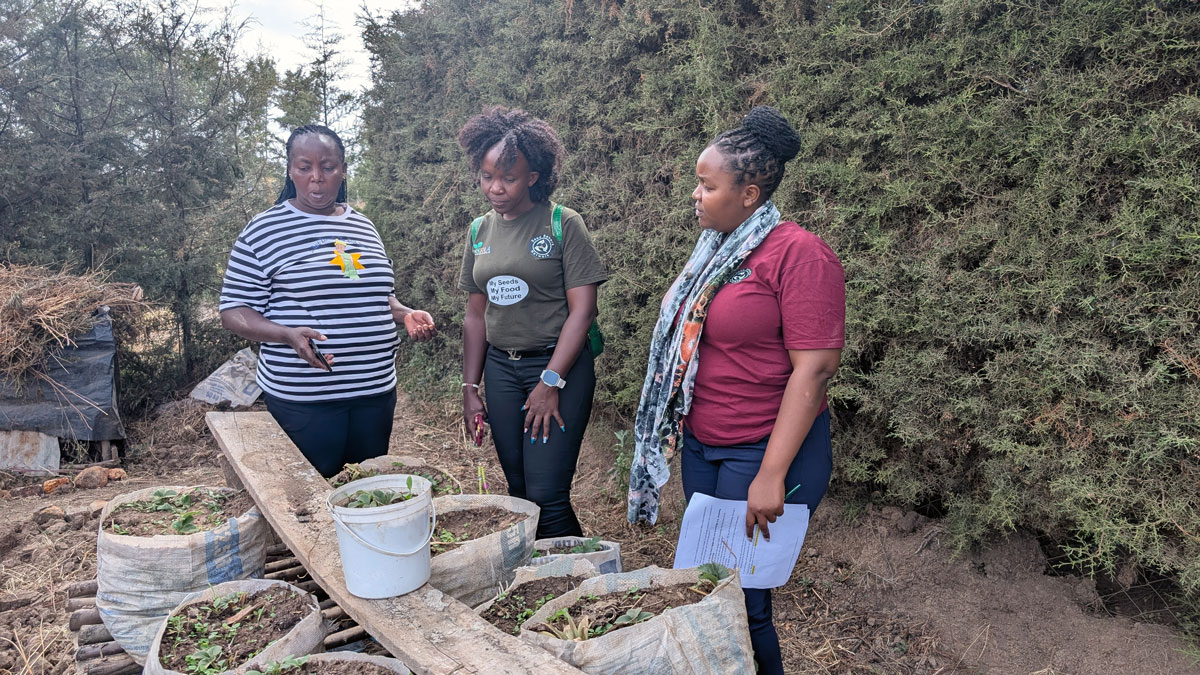
As people, organizations, and institutions work on these changes across scales, communities are mobilizing to build their resilience in the face of crisis. This course offers foundations to engaging in climate change work – addressing injustice, (re)building relationships, exploring solutions – at the community level. Starting from an understanding that all people and communities have strengths, skills, and knowledge, this course supports participants to share their experiences and knowledge (and those of their communities, where appropriate) to engage with community climate resilience topics in a way that is meaningful in their own contexts.

Live Session Options:
After registration, participants select one section for the duration of the course. While all participants engage in a shared online learning space (including discussion boards, assignments, and peer review), live sessions are held within each section. Two options are available to accommodate different time zones and schedules. Each section is capped at 20 participants.
- Section 1: Thursdays, 9 to 11 am ADT
- Section 2: Thursdays, 7 to 9 pm ADT



DATES
September 14 to November 6, 2026
Registration Closed
FACILITATOR
Marian Turniawan
DURATION
8 Weeks
COURSE TYPE
Online
Who can register
This course is designed for anyone interested in exploring climate change impacts at the community level and engaging in community resilience building – addressing injustice, (re)building relationships, and exploring solutions to the challenges of a changing climate. As this is a foundations course, you do not need any specific knowledge or experience in the climate change field. However, as the course is delivered in English, English language proficiency is required.
Participants should have access to a desktop or laptop computer, or a tablet, to engage fully in online activities and Zoom sessions. While a smartphone can be used, it may be difficult to view shared materials or participate in certain activities, such as digital whiteboards.
Given the participatory nature of the live sessions, a stable internet connection is important. A microphone is required for audio participation, and use of a webcam is encouraged. However, recognizing differences in bandwidth and comfort levels, participants are not required to keep their video on at all times.
Personal benefits
Personal Benefits
At the end of the course, participants will be able to:
- Explain basic climate change science and key concepts using accessible language and imagery,
- Use an intersectional gender-based lens to explore examples of differentiated impacts of climate change within their communities,
- Explore locally-led approaches to building community climate resilience, including mitigation, adaptation, and strengths-based strategies, and
- Assess the applicability of approaches to building community climate resilience within their own contexts.
By the end of this course, participants will have:
- Reviewed course content and completed comprehension checks, individual reflective activities, and group discussions through Moodle (the online learning platform),
- Participated in live session group discussions,
- Maintained a digital field journal with activities to be completed in their communities or their work contexts, based on provided prompts,
- Completed one of the final assignment options, either individually or in a group, and reflected on two of their peers’ assignments. Final assignment options:
- Produce a plan for the application or integration of any course learnings into the participant’s context.
- Create a knowledge sharing piece that translates or mobilizes any course learnings for the participant’s community.
- Create a digital “poster” (presentation, video, infographic, collage, etc.) highlighting any learnings from the course that connect to the participant’s context.
Time requirement
This course is delivered online over 8-weeks, using StFX Online’s learning platform, Moodle, and Zoom for live sessions. Participants will select one of the two live session options, both taking place on Thursdays: 9 to 11 am ADT (Halifax, Canada time zone) or 7 to 9 pm ADT. Once you register for the course and log in to the online platform, you will select your preferred time or indicate availability for either time (in which case, the facilitator will place you in a group).
In addition to participation in live sessions, there is an expectation of engagement with around 2 to 3 hours of content per week to prepare for the live session, and approximately 1 to2 hours per week to complete assignments/engage in online activities. The total expected commitment per week is 5 to 7hrs (2hrs class time, 3-5hrs outside of class time).
Please note: Completing assigned work prior to live sessions is critical to the approach to learning taken in this course. Participants are required to review and engage with the week’s content prior to live sessions, as they will be designed to apply ideas, analyze content in groups, or practice approaches. The live sessions are not conducted using a lecture style, and it will not be possible for the facilitator to cover all the content for those who don’t prepare. However, the facilitator will provide some time during the sessions to address any questions regarding the content.
Fees
Coady Institute is committed to ensuring that practitioners and community members dedicated to community-led development worldwide have access to its courses. Thanks to the generous support of individual, institutional, and corporate donors, the tuition fee of $1,500 CAD has been reduced to $400 CAD plus HST.
Full bursaries are available for First Nations, Métis, and Inuit community members residing in Canada, as well as individuals residing in Nova Scotia from African Nova Scotian communities and Nova Scotians of African descent. To request a full bursary, please contact us at coadyadmit@stfx.ca.
If paying by credit card is not an option, please contact coadyfinance@stfx.ca to arrange an alternative payment method.
This course is online. You will need a computer, reliable internet access (high speed is recommended), speakers and microphone.
Click here for the course syllabus