
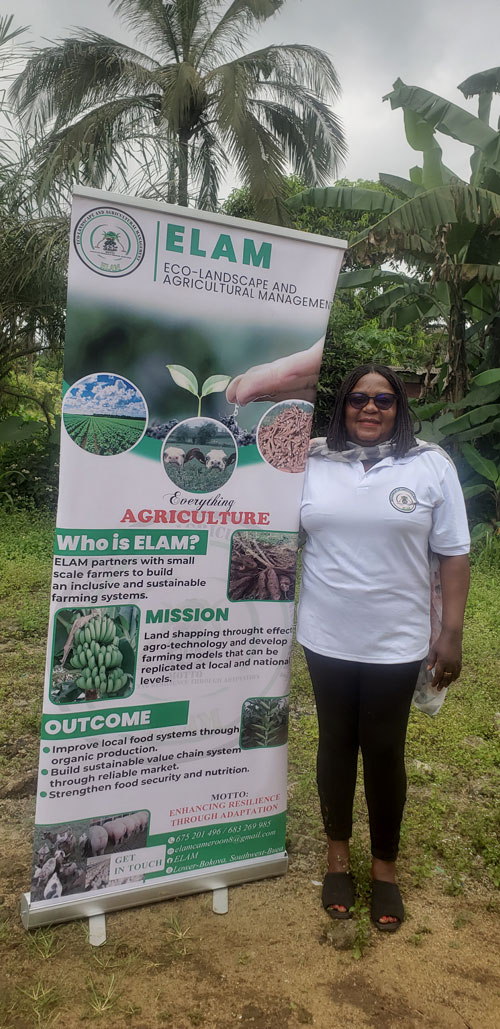
Coady graduate Jicenta Nchangnwie Foncha of Cameroon co-founded Eco-landscape and Agricultural Management (ELAM) in 2024. A graduate of three Coady courses – Livelihoods and Markets (2018), Social Enterprise for Inclusive Local Economies (2019) and Community Led Solutions for Climate Change (2023) – Jicenta is utilizing her learnings to work with small-scale farmers improving lives for Cameroonian women and families.
ELAM seeks to build an inclusive and sustainable farming system through organic production. This includes strengthening food security and nutrition, creating jobs in agribusiness to improve livelihoods, building sustainable value chain systems through reliable markets, and promoting synergies between social protection and agriculture/rural development. The organization has 30 farmers who have formed producers’ groups.
“We have meetings twice every month to encourage farmers,” Jicenta says. “Based on the knowledge and skills gained from Coady, I have, and am, training these farmers on climate smart farming techniques.”
These methods include using: organic matter such as compost manure, crop residue, and no chemical fertilizer to boost soil fertility; cover cropping and wood chips to protect soil from erosion, minimize nutrient loss, and maintain soil moisture; crop rotation, alternate cropping, and planting of nitrogen fixing crops to reduce pest and disease build up; and minimum tillage and agroforestry to improve production.
“This has boosted community cohesion, where farmers have been supporting each other through community labor efforts, reducing the cost of hiring labor,” Jicenta says. “We frequently hold workshops to identify challenges faced by different categories of farmers; and design tailored programs to meet their needs.”
She noted ELAM hosted five workshops in 2025 based on activities, needs, and challenges of the farmers. The workshops covered such topics as the advantages of mixed cropping, farmland preparation and management, data collection, integration of trees on farms, and storage of crops.
“Together we selected the crops to be planted, based on their benefits to farmers and the environment,” Jicenta says.
The workshops were complemented by visits to farms to assess the level of implementation (planting distances, weeding, application of manure and pesticides), with demonstrations where these were not properly carried out.
The farmers are recording progress, challenges, and other incidents to help identify challenges and possible mitigation measures. This will help in the preparation of activities for the 2026 farming season.
“This has improved their productivity resulting in regular supply of food for home consumption and sales while improving dietary patterns, household incomes, and creating employment,” Jicenta says. “The demand for our farm produce has offered livelihood prospects to farmers, with most farmers becoming members of the cooperative.”
Using the transformation of Cassava into tapioca as an example, Jicenta notes farmers have increased household incomes and improved welfare. Ten of these women have “petite businesses” selling farm produce, or transformed products, from farms. The farmers have also created a monthly contribution system where one person benefits and uses the money to enhance livelihood sustainability through diversification from all year-round farming activities.
“They have enough to eat, eat healthy and nutritious food, and they don’t skip meals,” she says.
ELAM’s activities have garnered attention from World Bank Group’s Emergency Project to Combat the Food Crisis Project for Cameroon and resulted in a donation of a machine for the preparation of plantain chips.
“We have had session of training and most women now do plantain chips either for snacks at home, children take them to school, or for sale,” she says. “This machine is hired out to individuals or groups and the money generated is put in the coffers of the farmers.”
Jicenta hopes ELAM will continue to create an environment that offers a clear opportunity to improve global food security without putting pressure on the environment, through food loss and food waste reduction.
She would like to enhance the organization’s work with women’s groups and people living with disabilities to meet the needs of their communities, thereby creating social justice and an inclusive economy. ELAM will continue to work with small-scale farmers for easy access to farming inputs and aggregate produce to reach market thus increasing capacity building of stakeholders across all value chain of farm produce. There is also a need to engage farmers in disaster risk reduction through climate information services to prepare for sudden catastrophe – e.g. temperature variability, drought incidence, pests, and diseases.
“We continue to carry out land shaping through effective agro-technology and develop farming models that can be replicated at local and national levels,” Jicenta says.
“We are expecting more farmers to join us in the days ahead.”
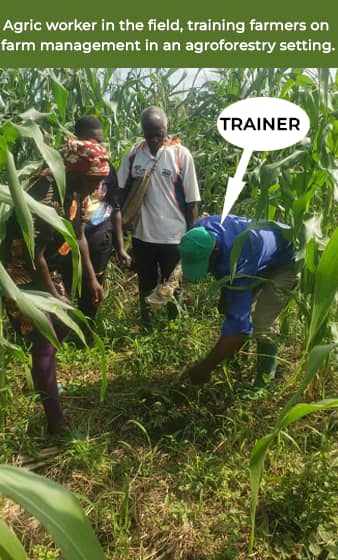
Field Visit
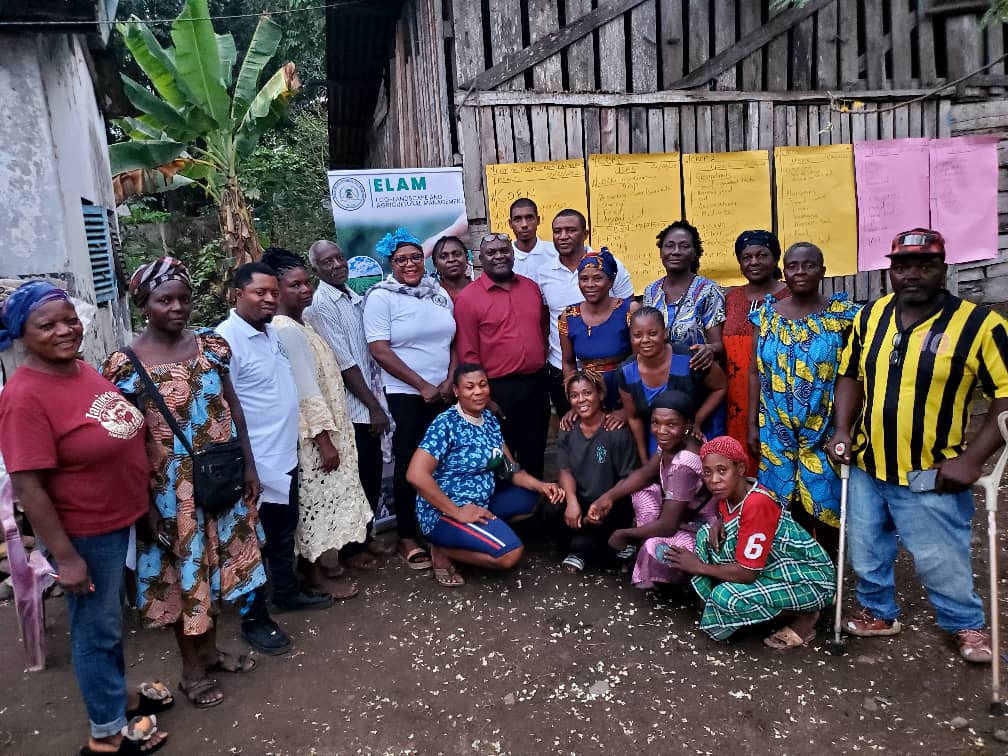
Farmers
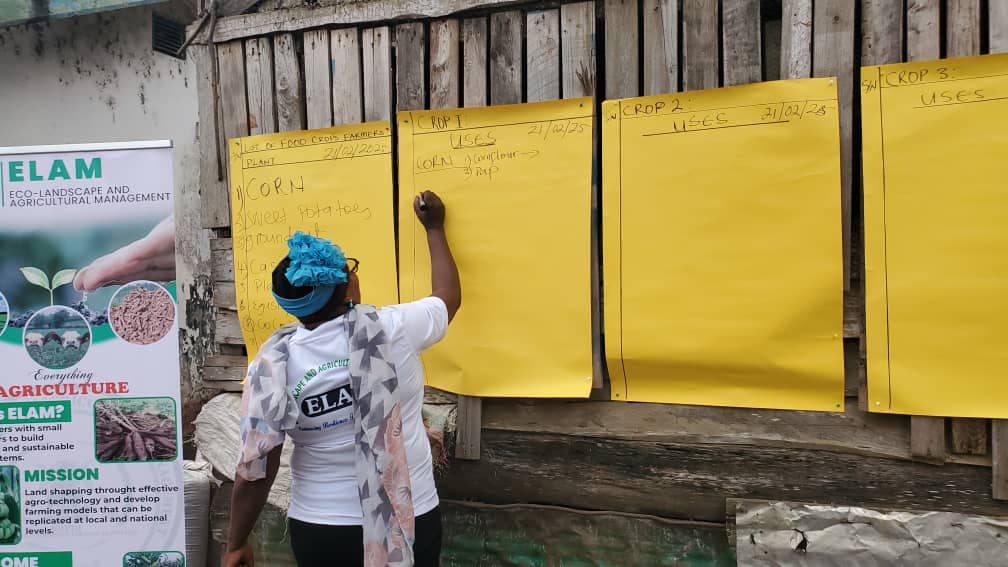
Training session workshop with farmers
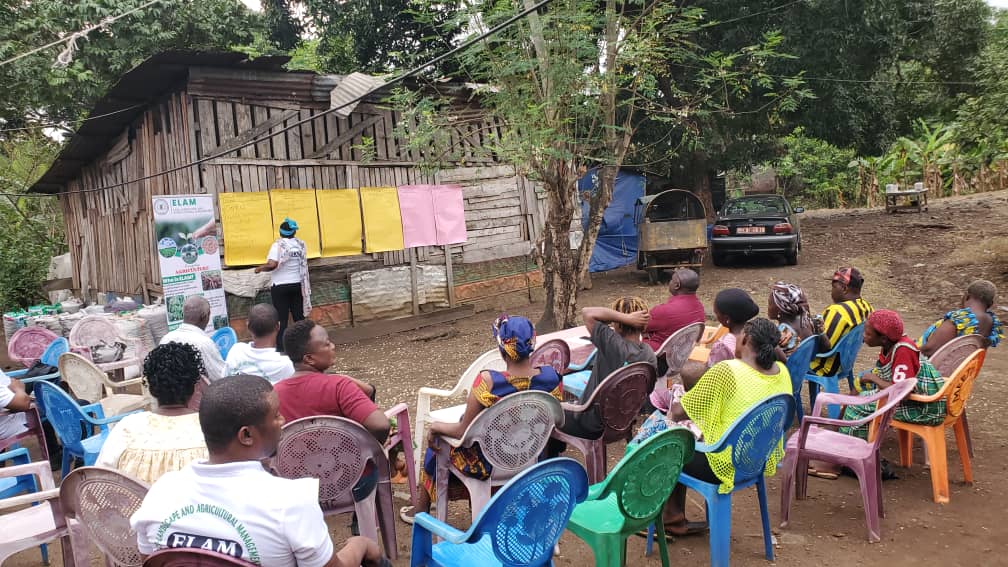
Training session workshop with farmers