“With shared commitment toward social justice, truth, and reconciliation.”
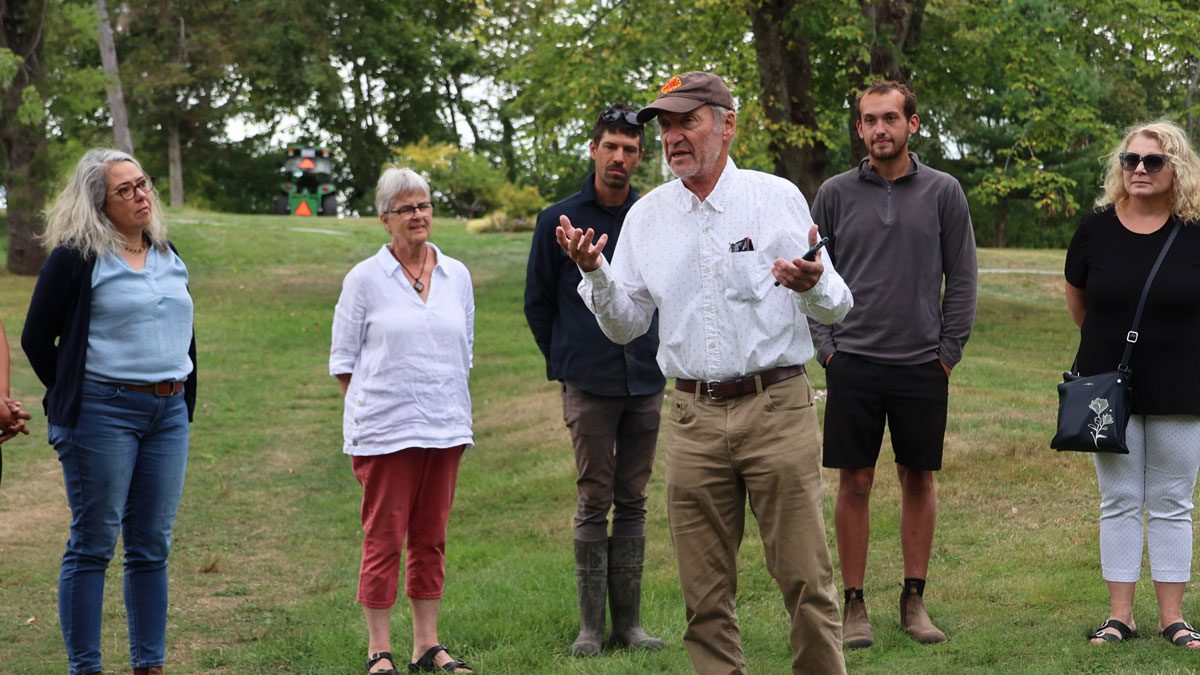
On a beautiful late summer morning, Coady Institute staff recently gathered to recognize the longtime relationship between the Institute and the Congregation of the Sisters of St. Martha. Sr. Donna Brady welcomed staff to St. Theresa’s Garden on the grounds of Bethany, the homestead of the community, to thank Coady for supporting the congregation’s arboretum project.
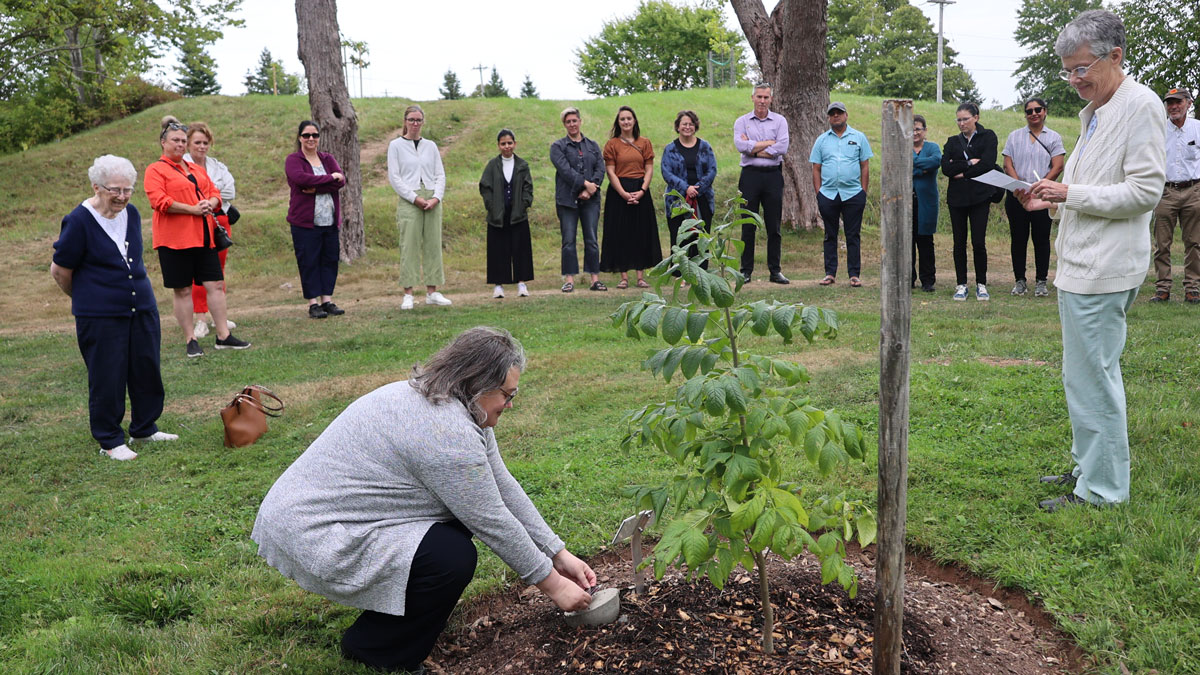
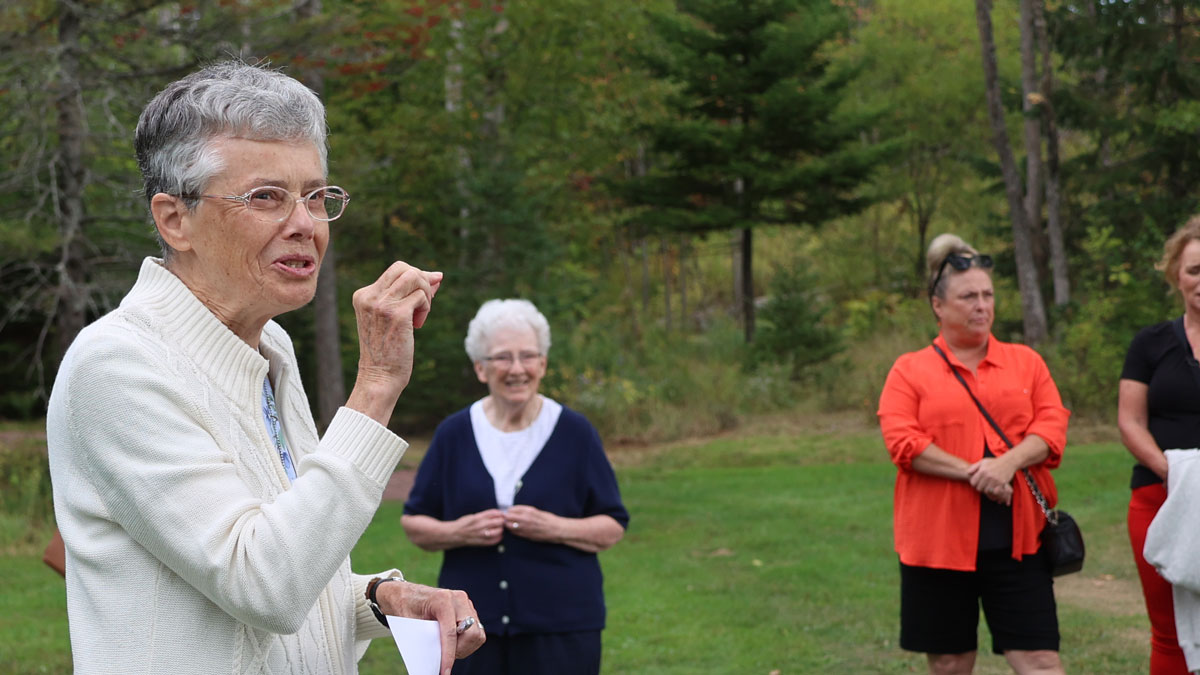
Donna explained how the Marthas are celebrating their 125th anniversary and are in the process of enlarging Bethany’s arboretum as everyone gathered around a newly planted Black Ash tree. The project began in 2017 with 25 trees identified on the property with their scientific names, descriptions, and history. An additional 25 trees have been added to form a 50-tree Bethany Tree Walk. Many trees commemorate people and events in the Marthas story.
Coady Institute and the Martha’s story is intertwined. Sister Marie Michael MacKinnon and Sister Irene Doyle Martha’s were invaluable to Moses Coady, Jimmy Tompkins, and many others in the early days of the Antigonish Movement. These early leaders brought education, cooperatives, credit unions, and rural community development to Atlantic Canada in the early 20th century as part of the St. Francis Xavier University’s Extension Department. This relationship continued with the establishment of Coady International Institute in 1959 and remains strong today with the Martha’s supporting various Coady programs. Coady resides in what was the original Motherhouse of the Martha’s.
“From the very beginning, the Sisters of St. Martha have stood faithfully with Coady and with our community,” Lynn O’Donnell, Coady Fund Development Executive, says. “As so many of our staff gathered in their honour, it became clear how deeply we hold the Marthas in our hearts.”
Donna says Coady contacted the Marthas to offer support after losing so many trees following Hurricane Fiona in 2022. As the arboretum committee began the process of replacing the lost trees, Black Ash was identified for planting due to the species being at risk due to the invasive Emerald Ash Borer, deforestation, climate change, and white-tailed deer browsing. The team helping with the arboretum began nurturing four small Black Ash trees to a size suitable for planting.
Black Ash, or wisqoq, was also vital to the culture of Mi’kmaq who lived on the land occupied by Bethany. The tree was used to make many functional items like chairs, canoes, axes, snowshoes, and most notably, baskets.
“The tree is important to the Mi’kmaw people and fit with the Coady program, Indigenous Women in Community Leadership,” Donna says. “We ask a blessing on these trees that they sink their roots deep and grow strong reminding us of our journey of reconciliation with Indigenous people.”
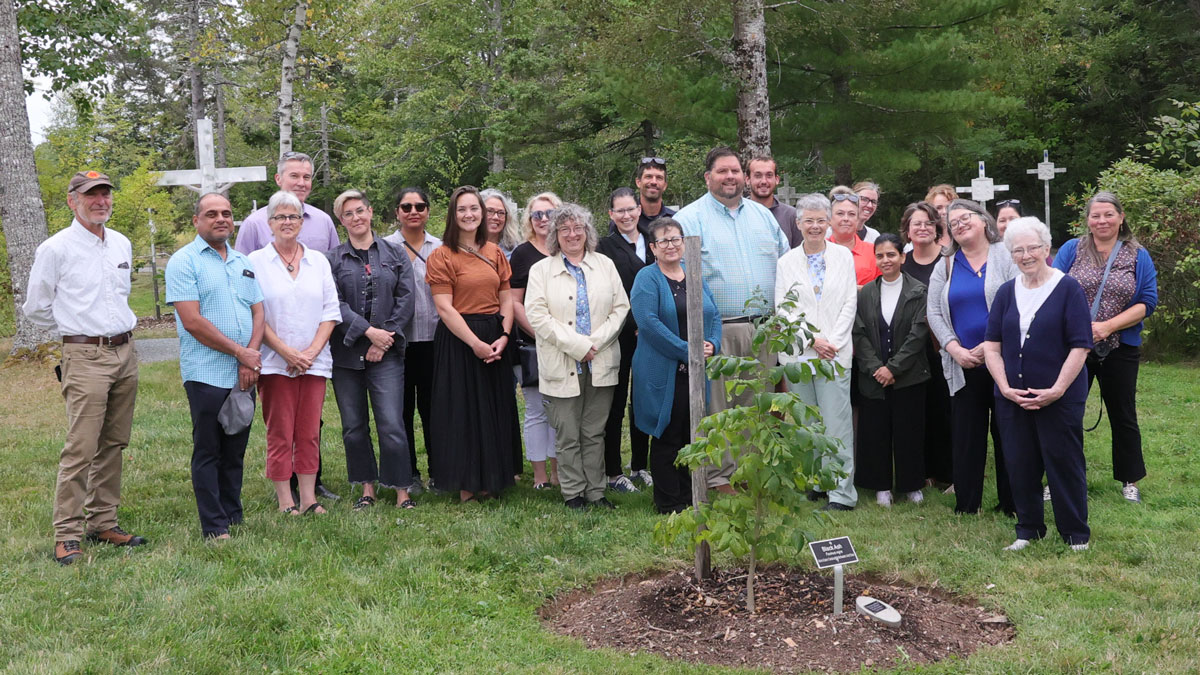
With agroecology and biodiversity, climate resilience, and indigenous community abundance being three of 12 areas of focus in Coady Institute’s new strategic plan Walking with Community, the planting of the Black Ash trees and support of the arboretum is fitting, as is the plaque placed at the base of the tree which notes:
“With shared commitment toward social justice, truth, and reconciliation.”