
Holding Each Other to Our Values: A Collective Practice of Feminist Leadership
By Lisa Faye
Feminist leadership is often treated as an abstract concept, one that can mean almost anything depending on who is using the term. At times it can be misunderstood as simply being “nice” or as something that only women can do. Historically, dominant ideas of leadership have been shaped by patriarchal norms such as hierarchy, control, individualism, competition, and ultimately holding authority. When leadership shows up differently, more relational, collective, or care-centred, it is often discounted or dismissed as “soft” or ineffective.
For generations, feminists and feminist organizations around the world have worked to challenge these norms. They have pushed to redefine leadership in ways that build safety, share power, center justice, and create conditions where people, and movements, can grow, learn, and be challenged together.
With the support of Global Affairs Canada, Coady Institute, alongside partners from the Christian Commission for Development in Bangladesh (CCDB), DidiBahini (DB), and The Story Kitchen (TSK), is currently implementing Samaan Aawaaj (pronounced Sah-maan Ah-wahzh) meaning Equal Voice.
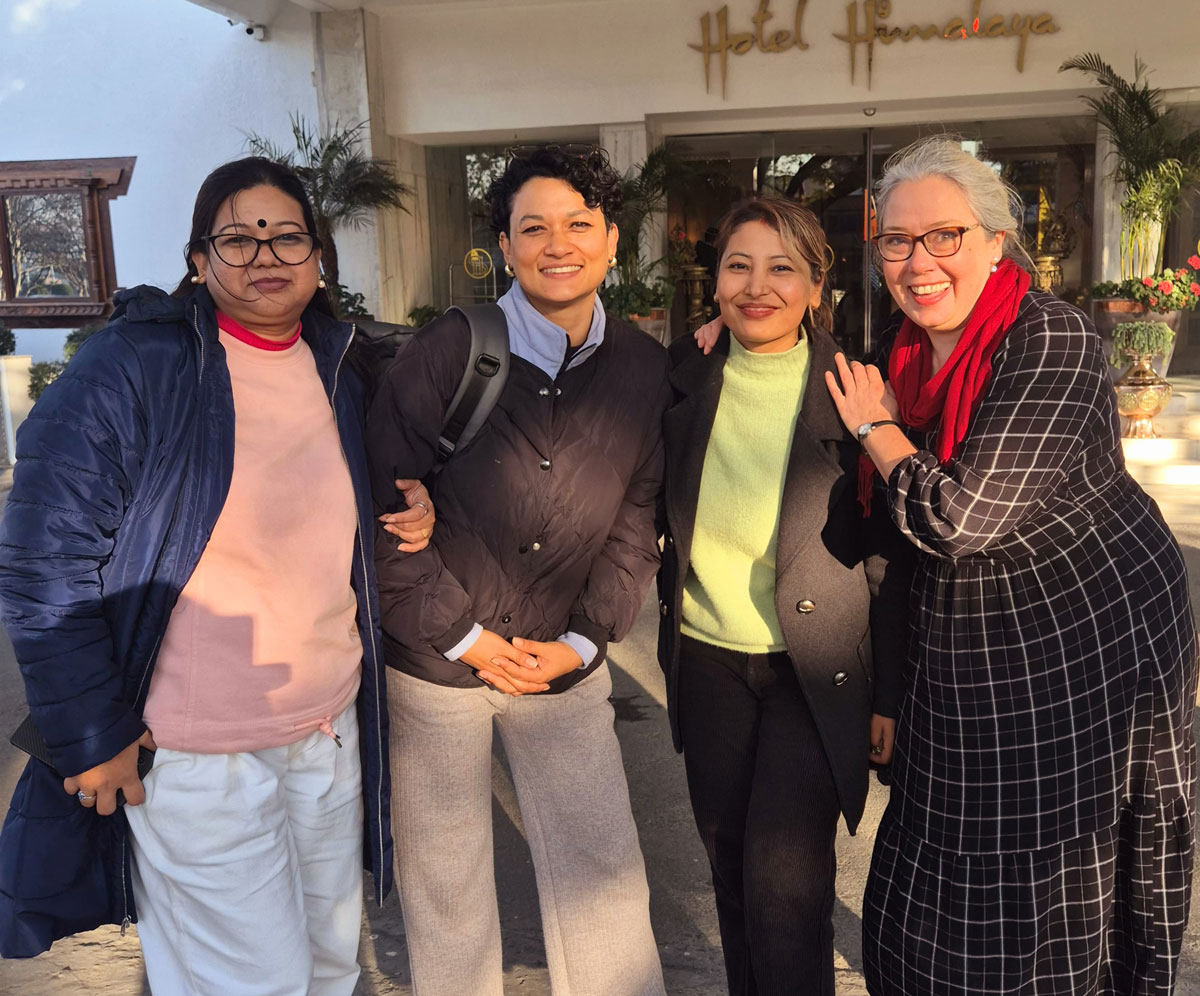
Samaan Aawaaj project managers Maria Sarker (CCDB), Pranjali Singh (Didi Bahini), Gardika Bajracharya (The Story Kitchen), and Lisa Faye (Coady Institute).
The project focuses on four interconnected areas of work:

Building Leaders’ Skills
We work with under-represented community leaders to strengthen feminist leadership, advocacy, and accountability - so they can speak up for change in their communities.
Connecting Women Leaders
We help women leaders and their organizations meet, share ideas, and support one another. There’s real power in community!

Creating Unlikely Allies
We engage people who might not usually support women leaders - conservative leaders, political figures, or young men - and help them see why women’s leadership benefits everyone.
Supporting Accountable Leaders
We help local leaders see community questions as engagement, and build transparency and self-reflection into their work.
While we knew what we wanted to do and we knew from the start that feminist leadership would be foundational for the project, we had yet to find our way to build that foundation.
In August 2025, Sarika Sinha, an educator at Coady Institute, travelled to Nepal to work with partners to co-develop feminist leadership courses. Together, Sarika and participants explored the history of feminist movements, examined the links between colonization and patriarchy, reflected on power and privilege, and began articulating their own definitions of feminist leadership. They left the week together grounded in the history of the movement and reflecting on what feminist leadership meant and looked like to them.
Building on this foundation, in January 2026 partners came together to collectively define the feminist leadership model and commitments that would guide Samaan Aawaaj.
The Samaan Aawaaj team understands feminist leadership as compassionate, values-driven, and deeply self-reflective, while remaining firmly focused on dismantling systems of inequity.
Power exists in all organizations and projects. Feminist leadership does not deny this reality but instead commits to sharing power intentionally and ethically. While many leaders create space, feminist leadership actively interrogates that space. Is it safe? Are people respected? Are they heard? Are they meaningfully engaged? Feminist leadership is grounded in intersectionality, intentionally centering voices that are too often excluded, and continuously examining how power, privilege, and authority are exercised.
What we developed is not, in itself, groundbreaking. A quick internet search for “feminist leadership” will surface many similar ideas. (In fact, Samaan Aawaaj partner, The Story Kitchen, has been clear about their commitment to feminist leadership, defining it on their own website.) What is different is how this commitment was built, collectively, relationally, and with intention. We shared stories of feminist leaders in our own lives. We named the pressures that can push values to the margins. And we committed to practices that would prevent this agreement from becoming symbolic or forgotten.
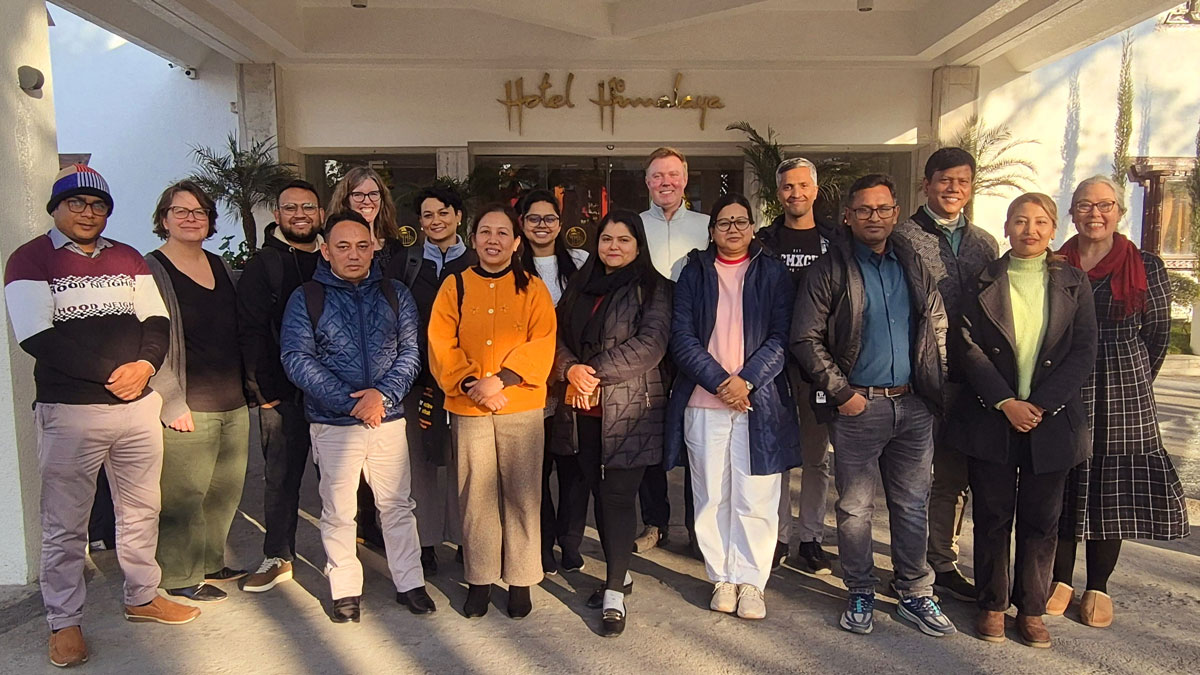
Project partners gathered in Nepal in early January for Samaan Aawaaj’s annual in-person Project Management Team (PMT) and Project Steering Committee (PSC) meetings.
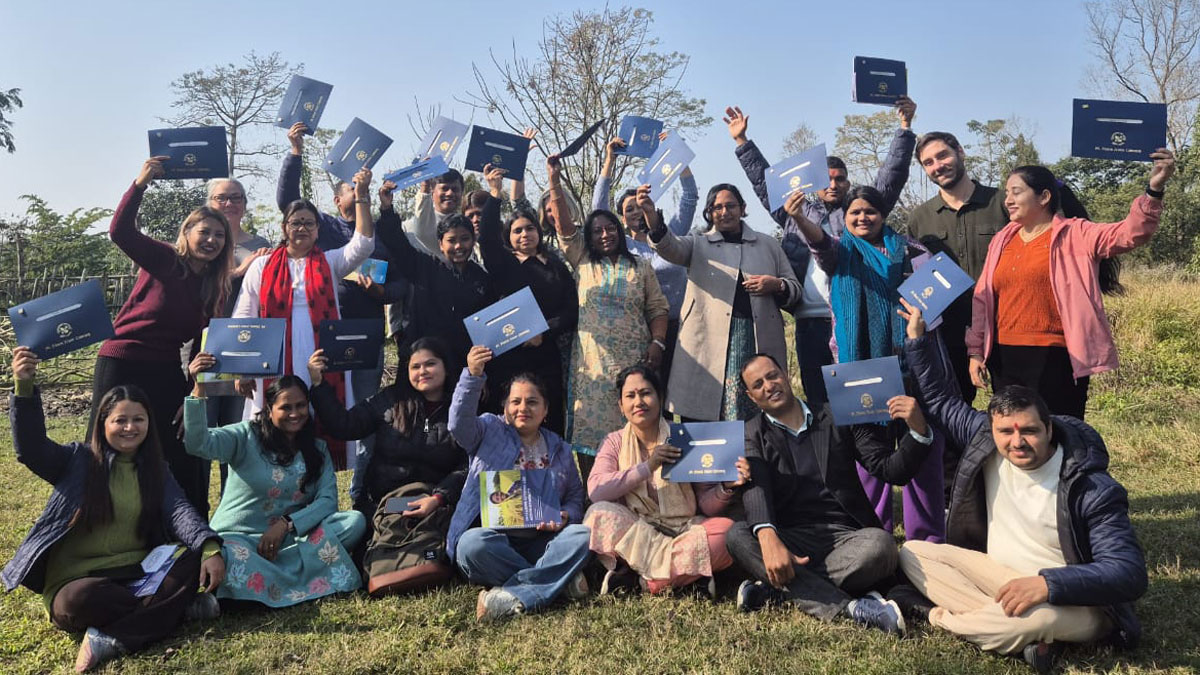
As part of the Samaan Aawaaj project’s learning program, Coady facilitators Julien Landry and Carmen Malena delivered an Inclusive Citizen-Led Accountability workshop January 15 to 20, 2026 in Chitwan, Nepal.
So, specifically, what makes our understanding and practice of feminist leadership special for us?
A shared commitment to accountability
An intention to actively monitor how we live our values
A recognition that feminist leadership is not synonymous with being “nice”

A grounded understanding of frustration in an unjust world
We have set ourselves an ambitious path. The commitments we have made to communities, partners, supporters, and to one another are not small. There is much to learn, and the work ahead is demanding.
We take this on knowingly, together, and with resolve. We are up for the challenge.
Lisa is the Samaan Aawaaj project manager for Coady Institute. Learn more about Samaan Aawaaj.