
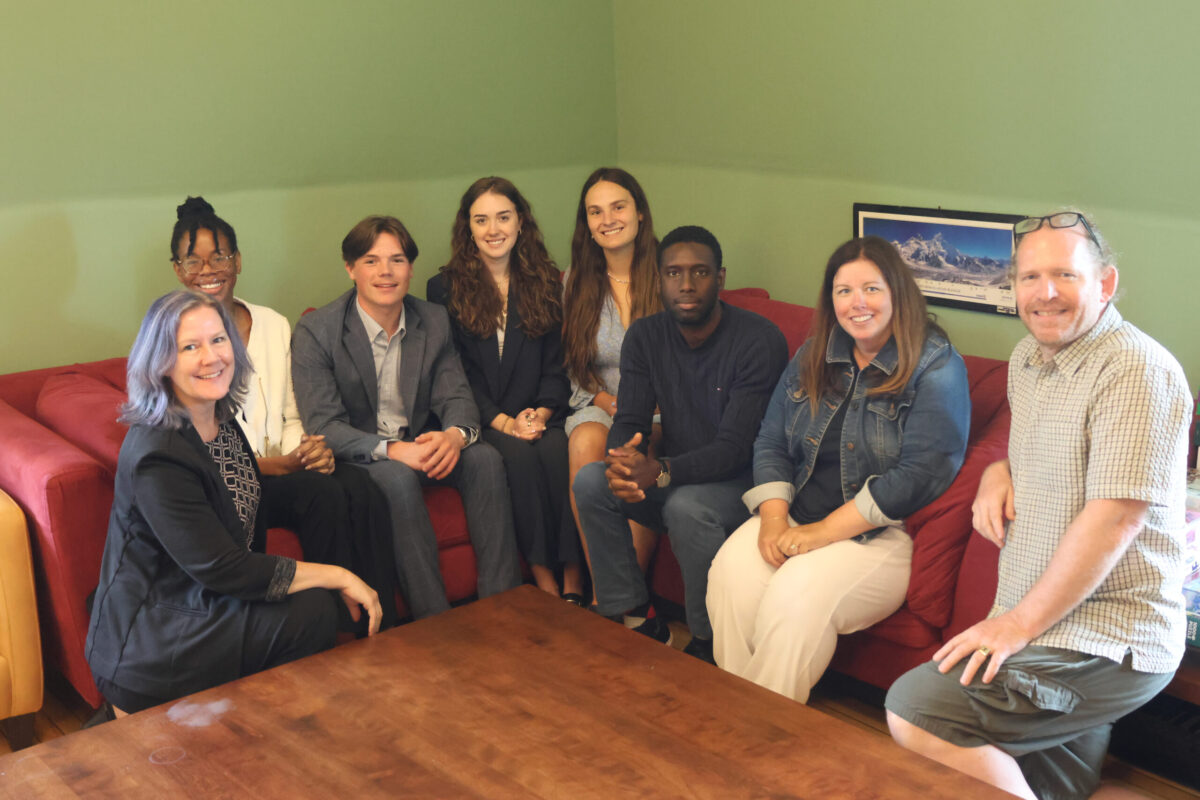
The 2025 Wallace Family Internships ended earlier this month with four student entrepreneurs making presentations about their 12-week experience. The interns reflected on a transformative journey; one rooted in curiosity and driven by community impact. Supported financially through the Wallace Family Entrepreneurship Fund, the internship is run through Coady Institute’s DiscoverBox.
The Wallace Family Internship program is designed to support St. Francis Xavier undergraduate students as they develop socially conscious ventures. Housed within DiscoverBox, the fellowship offers mentorship, funding of $8,000 each or $13,000 per team, and space for students to test bold ideas in real time. This year’s cohort brought forward ventures in health, education, fitness, and youth empowerment, each reflecting the intern’s commitment to addressing real-world challenges.
Dana Morrison, a recent business graduate, founded the Antigonish Black Youth Mentorship Program (ABYMP) to provide culturally affirming support for Black high school students. The initiative connects youth with Black mentors both from the university and the professional sector, creating a space Dana says she once needed herself.
“This project is about identity, confidence, and representation,” she explains. “It’s community building with intention.”
Dr. Neil Maltby is a faculty member in the Schwartz School of Business and a longtime mentor for the Wallace Family Internships.
“What sets the Wallace Internship apart is its grounding in both business strategy and social development,” Neil says. “Through DiscoverBox, students are immersed in a learning environment that pushes them to think beyond profitability and toward purpose.”
For Erica Cameron, a fourth-year student studying entrepreneurship and human nutrition, the internship provided space to develop Kinō Barre, a wellness platform that combines handcrafted wooden workout barres with digital movement classes.
“This is a physical product used to bring some kind of quiet peacefulness to your life… also again, moving your body and exercising your mind,” she shares. “I learned how to connect product development with human impact.”
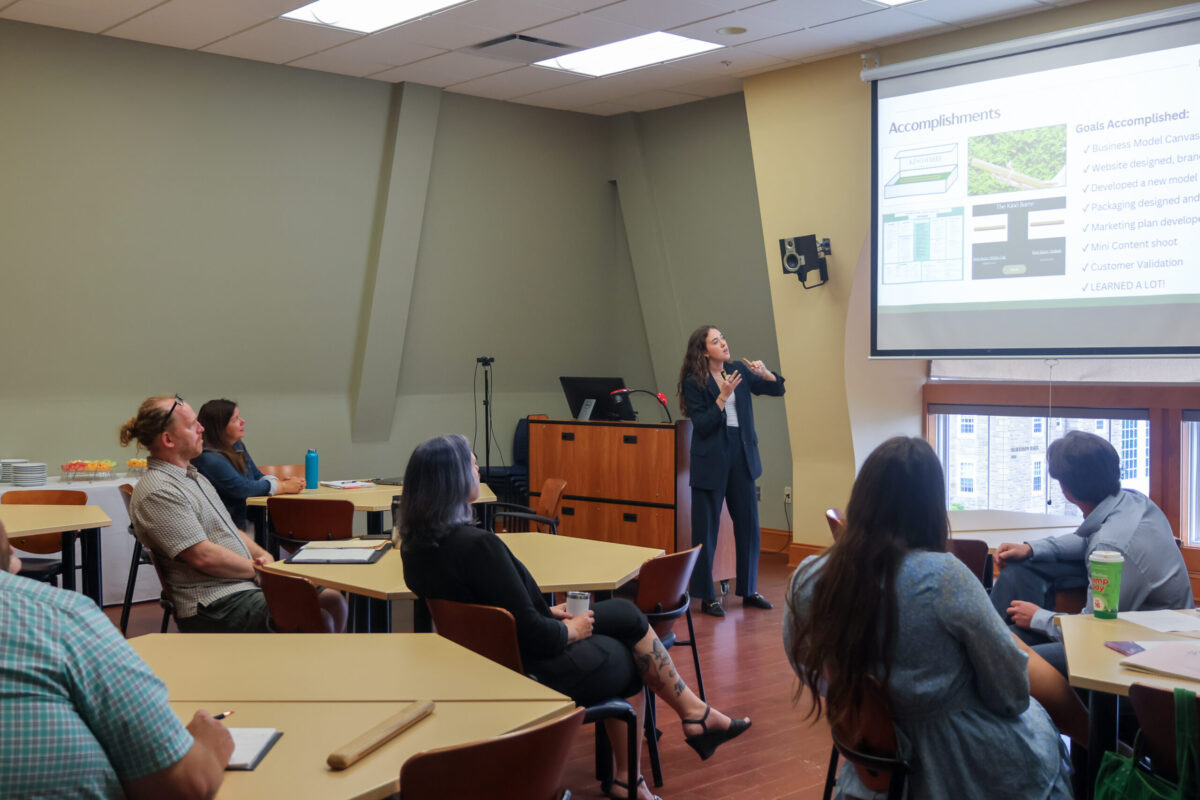
Piper Bullivant, entering her third year in human kinetics and education, launched the Olympus Team Sports School, a summer recreation program designed to foster healthy lifestyles among youth.
“This project brought together my interests in sports, education, and community,” Bullivant says. “It helped me understand the work that goes into creating something that lasts.”
Third-year finance major and economics minor Isaac Hierlihy is channeling his entrepreneurial drive into solving a critical issue in youth sports: injury management. Drawing from personal experience as an athlete, Hierlihy co-founded Athlete Aid, a mobile application designed for non-professional sports organizations to track and manage injuries.
“It helps coaches know who’s healthy, who’s injured,” he explains, “The app helps physiotherapists track everything more efficiently instead of on paper.”
Throughout the summer, faculty mentors played a key role in shaping each intern’s learning experience. Dr. Abede Mack, who worked closely with the students, emphasized the importance of iterative growth.
“The Wallace Internship offers a space to experiment,” he says. “There is room for failure, reflection, and recalibration which is a rare and valuable combination in undergraduate learning.”
Dr. Lisa Watson, Dean of the Gerald Schwartz School of Business, attended the final presentations and commended the depth of insight the students brought to their work.
“These interns are engaging with complex problems through innovation,” she says. “It is deeply encouraging to see students leading projects that connect business education with community development. That synergy is at the core of what the Wallace Internship and Coady Institute aim to achieve.”
Now in its ninth year, the Wallace Family Internship continues to demonstrate the power of interdisciplinary, values-based learning. Its connection to DiscoverBox anchors the internship in Coady’s long-standing mission to equip changemakers around the world.
“This is applied learning in its highest form,” Abede concludes. “Students aren’t just imagining solutions but also they’re building them, testing them, and learning how to lead with both heart and rigor.”
Many of the interns plan to carry their ventures forward, either in their current form or through new changes shaped by community feedback. Whatever comes next, the lessons of the Wallace Family Internship, and the support structures that made it possible, will remain foundational.
In cultivating both entrepreneurial skills and social awareness, the Wallace Family Internship exemplifies how institutional partnerships can help bold ideas take root and how, through mentorship and mission-driven learning, they can grow into something with lasting impact.