
From Participant to Facilitator: Katherine Fleming Legacy Comes Full Circle
Leadership development for African women is not a luxury. It is an investment in the future.
When Saliwe Mutetwa-Zakariya returned to St. Francis Xavier University for Homecoming this year, she returned in a different role.
Four years after receiving the Katherine Fleming International Development Award and coming to Coady Institute as a participant, the Zimbabwean women’s rights advocate returned as a speaker — and as a co-facilitator now helping other African women leaders strengthen the leadership they already bring to their communities.
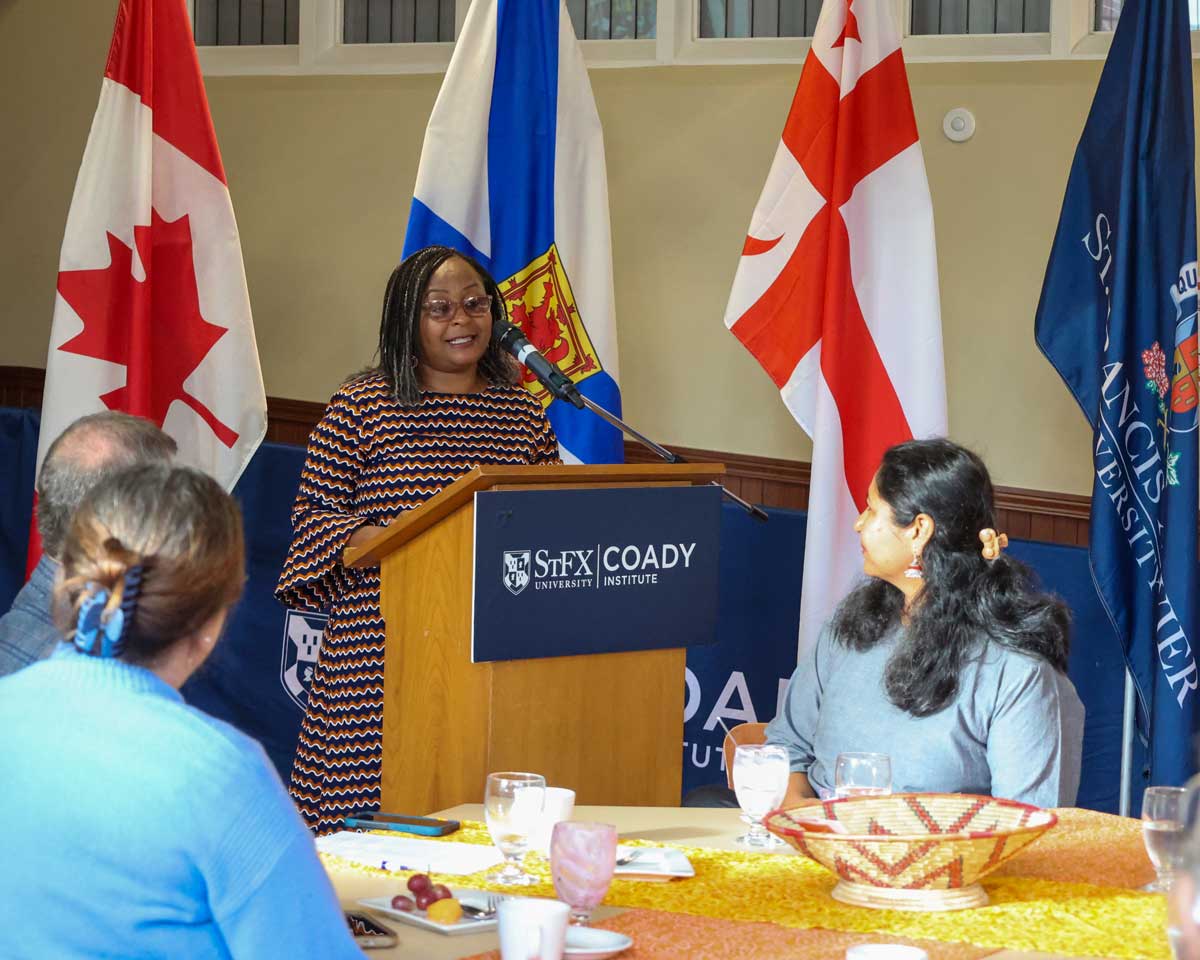 Saliwe shared that journey October 3 at the Alumni Breakfast with Coady Institute, a Homecoming gathering celebrating the Katherine Fleming legacy and its evolution over more than 25 years.
As founder of Talia Women’s Network in Zimbabwe, Saliwe works with women and girls on economic empowerment, leadership, gender equality, and community development. Earlier this year, she joined Coady Director of Programs Dr. Martha Fanjoy as a co-facilitator of the Katherine Fleming Women’s Leadership Course for African Women Leaders in Zambia.
Co-hosted with the Nyapachuma Memorial Foundation, the course brought together 23 women leaders from nine African countries to learn from one another, reflect on their own leadership experiences, and build relationships that continue beyond the course.
Saliwe’s journey from participant to facilitator reflects an important evolution in the Katherine Fleming program.
“That journey — from participant to facilitator — has given me a very different perspective on what this program means,” Saliwe says. “Because when you are a participant, you are asking: what am I learning? But when you become a facilitator, you start asking: what is happening in the room?”
As a co-facilitator, Saliwe saw the importance of creating space for participants to reflect on the leadership they were already practicing while learning from the experiences, challenges, and solutions of other African women leaders.
“One of the things I experienced in Lusaka this year is that leadership is not always about becoming someone else,” she says. “Sometimes leadership is about recognizing what is already inside you. Leadership is not simply about acquiring skills, it is also about understanding why we lead the way we do.”
The ripple effect of investing in women leaders
At Homecoming, Saliwe expressed her gratitude to those who support the Katherine Fleming program. She described a “ripple effect” that extends the impact of leadership education well beyond an individual participant or the time spent together during a course.
“When I received the Katherine Fleming Award in 2022, I understood the program from the perspective of someone being invested in,” she says. “This year, as a facilitator, I understood something else. I understood the responsibility that comes with that investment.
“When you invest in an African woman leader, you are not simply investing in one individual. You are investing in the people she works with. The people she mentors. The communities she serves. The organization she leads. The young women who are watching her. And perhaps even the women who will come after her.
“That is why I think leadership development for African women is not a luxury. It is an investment in the future.”
That investment has been at the heart of the Katherine Fleming International Development Award for more than 25 years.
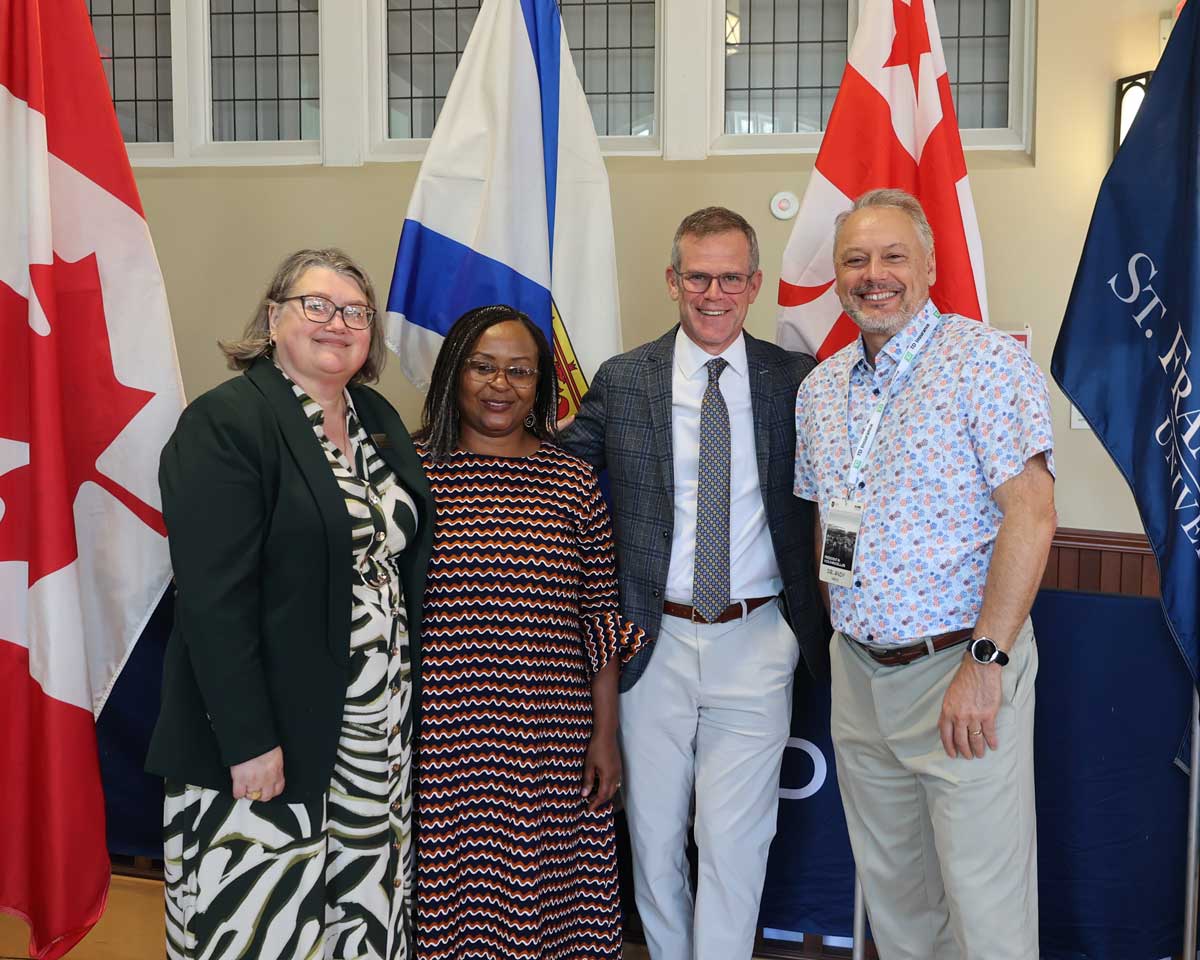 The award was created in memory of Katie Fleming, a 1985 StFX graduate and Rhodes Scholar who worked with UNICEF in Eastern and Southern Africa before her death in Tanzania in 1999 at the age of 35.
Traditionally, the Katherine Fleming endowment supported individual African women leaders to study at Coady Institute in Antigonish. Today, that legacy is reaching a larger group of women through the annual Katherine Fleming Women’s Leadership Course for African Women Leaders offered in Africa.
The evolution of the program has required another kind of investment.
Last year, we spoke about the importance of expanding the course to Africa and creating an even greater impact,” says Kevin McGilly (StFX ’86), a friend of Katie Fleming and member of the award’s advisory committee. “To do this, we realized we would have to significantly grow the endowment.”
Once again, he says, Katie’s classmates, friends, family, and other supporters responded.
“This year the endowment will surpass the $1 million mark. Thank you all for this commitment in helping African women leaders.”
For Saliwe, the value of that investment extends beyond providing women with new skills. She told those gathered at Homecoming that “economic empowerment without agency is incomplete.” Supporting women’s leadership, she says, also means creating opportunities for women to recognize their own strengths, make decisions, use their voices, and lead in ways grounded in their own experiences and communities.
“We are not creating leaders for Africa, but creating space for African women to recognize, strengthen and exercise the leadership they already carry,” Saliwe says. “And when women lead differently … communities experience the difference.”
For Coady Institute, the evolution of the Katherine Fleming program demonstrates what can happen when learning is carried forward: a participant becomes a graduate, a graduate becomes a facilitator, and her experience helps create opportunities for others.