We remember the children who never returned home, the survivors of residential schools, day schools, and their families and communities. We recognize the painful loss of childhood experienced by generations of Indigenous children, as well as the enduring intergenerational impacts on families and communities, and we understand that this history must inform our responsibilities today.
As an Institute located in Mi’kma’ki, the ancestral and unceded territory of the Mi’kmaq, and as partners to many Indigenous nations and individuals across Turtle Island, we recognize with humility our responsibility to ensure that truth and reconciliation are reflected in how we learn, build relationships, make decisions, and approach our work.
For more than a decade, Coady Institute has been learning alongside Indigenous graduates, mentors, Elders, partners, and communities. They have taught us the importance of relationship building first, they have challenged us when we have made mistakes, and they have encouraged us to think differently about our role and responsibilities as an institution. Indigenous knowledge, leadership, and lived experience continue to inform our educational programs, institutional practices, and relationships, most especially our Circle of Abundance program. This initiative has been grounded in the leadership and guidance of Indigenous women across the country.
We are committed to deepening our work in respect, relevance, reciprocity, responsibility, and relationships, while recognizing and honouring Indigenous knowledge, scholarship, and teachings.
This commitment includes learning from Two-Eyed Seeing, a principle shared by Mi’kmaw Elder Albert Marshall. Two-Eyed Seeing encourages us to learn from the strengths of Indigenous ways of knowing with one eye, from the strengths of Western ways of knowing with the other, and to use both eyes together for the benefit of all.
We are putting this learning into practice by supporting Indigenous-led education, working with Indigenous Elders, mentors, educators, graduates, and partners, and examining how we can decolonize our programs, relationships, and institutional practices. It also means beginning with the gifts, knowledge, and strengths already present in communities and grounding our work in listening, reciprocity, relationship, and responsibility to one another and to the land. It also means doing our part to support Indigenous students on campus, both at Coady and in the broader StFX community.
We recognize that truth and reconciliation require more than words. This is ongoing work that calls for humility, accountability, and sustained action. We remain committed to examining our own practices, strengthening relationships with Indigenous Peoples and communities, and ensuring that what we learn continues to change how we work.
Every Child Matters. 🧡
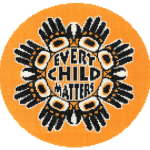
Every Child Matters
Hand-stitched by Coady employee Lola Corkum, this needlepoint hangs in Coady Institute offices as a quiet reminder of the children who never returned home, the survivors of residential and day schools, and the enduring impacts on Indigenous families and communities.
Its presence offers a simple, meaningful reminder of the importance of remembering, listening, and continuing the work of truth and reconciliation.