Coady Institute Executive Director Gord Cunningham shares how we have a responsibility to take part in the dialogue on racism in our society.
The Canadian Council for the Advancement of Education has recognized St. Francis Xavier University and Coady International Institute for the Indigenous Women in Community Leadership (IWCL) Alumni Gathering. The event was awarded gold in the Prix d’Excellence category of Best Indigenous Relations Initiative.
For many graduates of Coady International Institute, the pandemic and the measures put in place in response have led to adaptive and innovative ways to continue to work with citizens and communities. A small group among these graduates – from Nepal, Ethiopia, Kenya, Cameroon, Nigeria, and Ghana – come together to share how they are coping as governance practitioners working through the pandemic.
One of the challenges in Nigeria’s democratic governance process is the lack of depth of public knowledge on reformed criminal justice laws in Nigeria. Due to government policies banning public gatherings and the need for physical distancing, PWAN has had to re-strategize by converting all its awareness programs to radio-based programs.
After one week of lockdown in Nepal, Sharecast took the initiative to launch a nationwide survey in order to understand citizens’ knowledge, attitude, and practices (KAP) regarding COVID-19. The findings are being used by frontline responders, and to design messages and choose channels for advocacy-related work.
The COVID-19 outbreak coincided with three critical situations in Cameroon: an ongoing internal war, the rumoured death of the president, and a questionable reconstruction program for homeless war victims whereas the military and armed groups are still fighting. Having faced six consecutive years of intense political crises and now adding a health crisis, I am concerned about Cameroon’s emergency management strategy.
As a national women’s rights network, NETRIGHT has issued two statements calling on the government to ensure COVID-19 interventions are responsive to the needs of the poor, including homeless women and the vulnerable in society. Also, NETRIGHT mobilised funds among women groups which has been donated to the Ministry of Gender, Children and Social Protection (MoGCSP) in Ghana to support its efforts in reaching out to vulnerable and homeless women and children.
Generally, in Ethiopia the side effects of COVID-19 have been more serious than the health-related challenges caused by the virus itself. This encompasses political, economic, socio-cultural, and psycho-social harms as well as legal disruptions caused by the virus.
In Mombasa, Kenya, organizations have decided to work together to address various children’s issues in the advent of COVID-19. The Mombasa County Child Rights Network (MCRN) is composed of organizations working for and with children. As a network we are focusing on child protection as a major governance issue, and are enabling children to participate, speak out, and create messages on COVID-19 to the world.
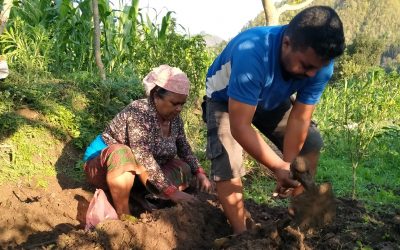
The Community Self-Reliance Centre (CSRC) has been facilitating land and agrarian issues in Nepal and working with landless and smallholder peasants since 1994. CSRC published an article on the effects of COVID-19 on agriculture and on landless and smallholder groups.